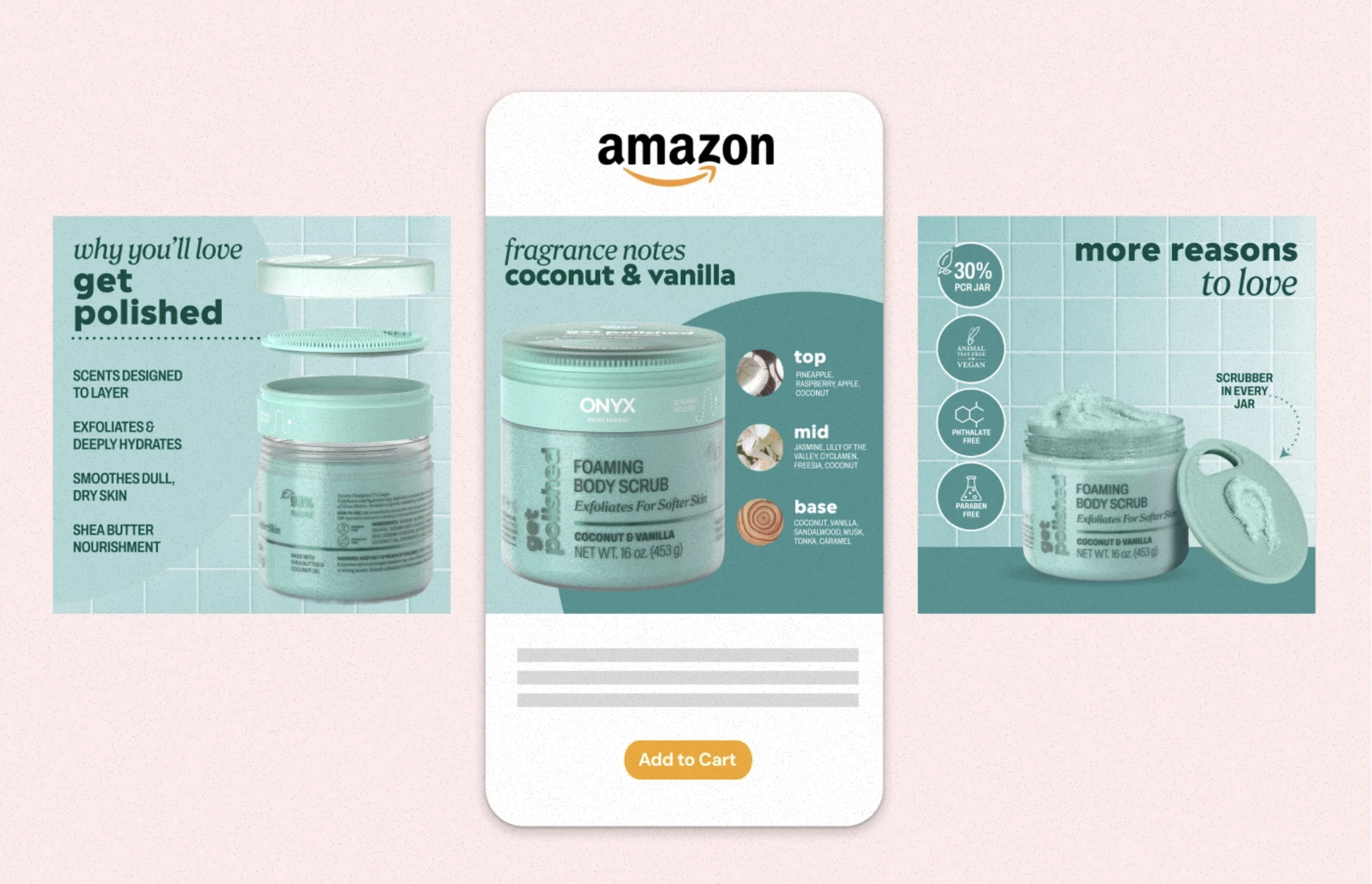
Amazon Listing Images Need a Strategic Sequence
Amazon listing images should work like a visual sales conversation, not a random gallery of product graphics. The main image earns the click, but the rest of the Amazon listing images need to explain the product, build trust, answer objections, and create a reason to buy. For CPG, beauty, wellness, pet, food, and lifestyle brands, the image stack is often the first true brand experience on Amazon. If every image tries to communicate every benefit, the listing becomes noisy. If every image has one clear job, the shopper can understand the offer quickly and move toward purchase with more confidence.
Design Amazon Listing Images for Scanning
Most shoppers do not read Amazon listing images slowly. They scan on mobile, compare alternatives, and make fast judgments about quality. That means hierarchy matters more than density. Large benefit statements, short phrases, strong product visibility, clean contrast, and a consistent visual system usually perform better than overloaded slides. Premium Amazon listing images still need conversion-focused information, but that information has to be organized with taste. The goal is to make the product feel easy to understand without making the brand feel cheap, crowded, or overly promotional.
What to Include in an Amazon Image Stack
A strong Amazon image stack often includes a clear main image, a benefit-led secondary image, product detail support, ingredient or material education, use cases, lifestyle context, scale or sizing, comparison logic, and trust-building proof. The exact Amazon listing images depend on the category, the customer, and the product complexity. A supplement brand may need dosage, ingredient, and ritual clarity. A snack brand may need flavor, texture, and pack-size clarity. A beauty brand may need results, usage, and shade or scent information. The goal is not to follow a generic Amazon template. The goal is to answer the questions that block purchase.
Make Amazon Listing Images Repeatable Across SKUs
For fast-moving product brands, Amazon listing images should become a repeatable creative system. Image roles, typography rules, claim hierarchy, photography direction, icon style, color logic, and layout behavior should be defined so new products can be added without reinventing the PDP every time. This is especially important for brands with multiple flavors, variants, bundles, sizes, or product lines. A repeatable Amazon listing image system keeps the catalog consistent while still allowing each SKU to communicate its own benefit, audience, and product story.
How to Know Your Amazon Listing Images Need Work
Your Amazon listing images may need work if shoppers keep asking basic questions in reviews or customer service, if competitors explain benefits faster, or if the product feels more premium on your website than it does on Amazon. Another warning sign is a stack of images that looks designed by different people at different times. Strong Amazon listing images should make the product easier to compare, easier to trust, and easier to remember. Before spending more on ads, it is often smarter to improve the creative that every paid and organic shopper sees first.
Amazon Listing Images and Creative Direction
The best Amazon listing images come from a blend of marketplace strategy and creative direction. Keyword research, reviews, and competitor analysis can reveal what shoppers need to know, but design decides how that information should feel. A premium Amazon image stack needs product clarity, brand consistency, visual hierarchy, and enough emotional pull to make the page feel worth staying on. That is the difference between Amazon listing images that simply fill space and Amazon listing images that help a product sell.